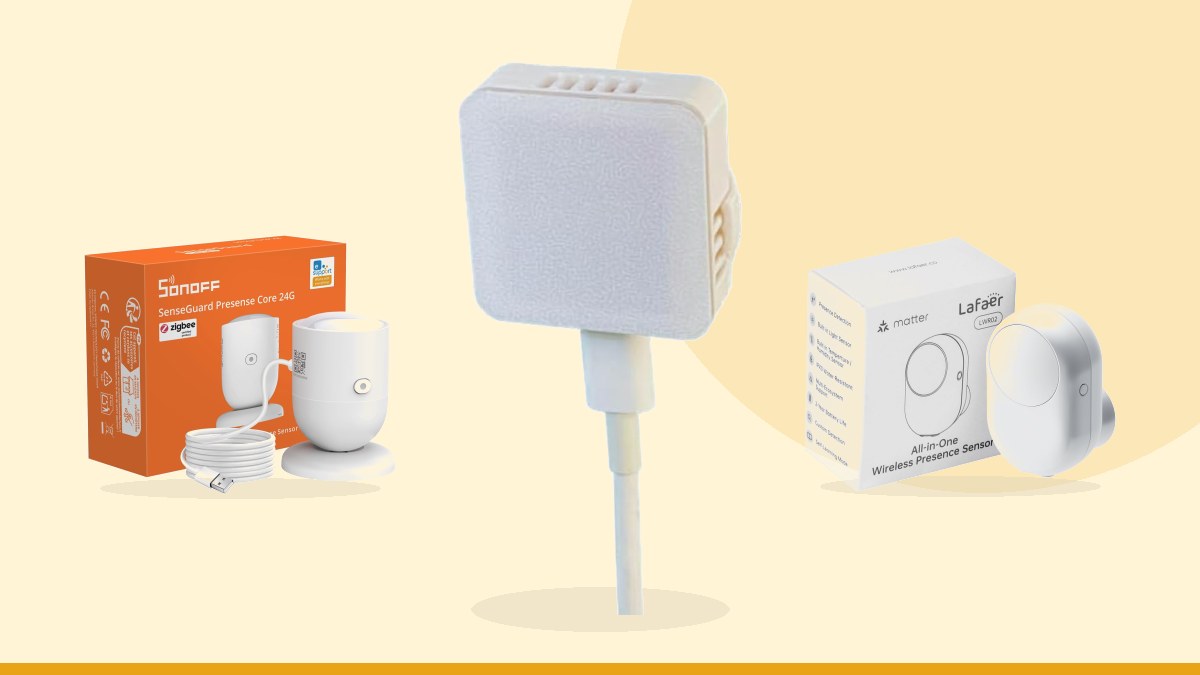
5 Home Assistant Presence Sensors That Catch Stillness (2026)
As an Amazon Associate I earn from qualifying purchases. When you click a product link on Repack Mechanics and buy something on Amazon, Amazon pays us a small commission; the price you pay is the same.
The right mmWave presence sensor for Home Assistant depends on three variables: how the room is powered, which protocol your hub speaks, and whether you need a lux reading alongside occupancy.
If your room has a USB-C power point and you run a plain Home Assistant setup with no other smart-home platforms, go straight to the Akamatis Litos v3 — it ships pre-flashed with ESPHome, includes a VEML7700 light sensor, and needs nothing beyond your Wi-Fi credentials to appear in Home Assistant.
If you already own a Zigbee coordinator and want zone-level false-trigger suppression — useful in open-plan rooms with fans or HVAC — the SONOFF SNZB-06P24 handles that through its seven-zone layout and self-learning calibration. It also works with SmartThings and Alexa if your stack is mixed.
If the room has no convenient power outlet or sits in a damp environment like a bathroom or kitchen, the LAFAER LWR02 is the only pick here that is battery-powered, IPX3 splash-rated, and Matter-over-Thread compatible. It needs a Thread border router (Apple TV 4K, Echo 4th Gen, or Home Assistant Yellow all qualify).
For a bare-minimum mmWave sensor at the lowest outlay — no light sensor, no extra protocols — the AKAMATIS v2.2 is the right starting point. And if you are equipping two rooms at once, the Litos v3 2-pack saves money over two single purchases while delivering identical hardware in both locations. All five picks are reviewed in full below on Repack Mechanics.
In this guide
Best Overall — Akamatis Litos v3 (1-pack)
- 24 GHz LD2401 radar detects stationary micro-movements up to 20 ft
- VEML7700 lux sensor enables dark-only lighting automations
- Ships pre-flashed with ESPHome; no manual YAML needed
Best Zigbee mmWave — SONOFF SNZB-06P24
- 7 configurable detection zones within 4 m and 110° field of view
- Self-learning calibration filters fans, pipes, and airflow
- Works with Home Assistant, SmartThings, and Alexa
Best Battery-Powered — LAFAER LWR02
- Matter over Thread — no new hub if you have Apple TV 4K or Echo 4th Gen
- IPX3 splash-proof for bathroom and kitchen placement
- Dual PIR + mmWave catches both motion entry and seated stillness
How we picked
No product in this article was handled or installed by this desk. Each pick was assessed by comparing manufacturer listing specifications, stated radar chip models, protocol compatibility claims, and aggregated buyer feedback themes sourced from public purchaser reports. Where owner feedback patterns were thin — particularly on newer SKUs — the assessment leans on the radar module’s published datasheet characteristics and the ESPHome project’s documented integration behaviour for the LD2401 and LD2410B chips (esphome.io). The Connectivity Standards Alliance (CSA) Matter specification v1.3 was used as the reference for Matter over Thread claims on the LAFAER LWR02. Price bands (budget / mid-range) are assigned relative to the five picks and reflect the category at time of research, not live pricing.
Owner feedback patterns noted per pick are drawn from publicly visible purchaser reports; approximate shares are directional, not statistically precise. Roughly one in ten mentions of sensitivity tuning across Wi-Fi mmWave models informed the false-exit caveat repeated for Akamatis products. The SONOFF SNZB-06P24 calibration note comes from a consistent thread pattern across Zigbee-focused community boards. No product was ranked on star-rating count alone; radar chip generation, protocol fit, and power-source flexibility each carried weight in the final order.
Editorial responsibility: Repack Mechanics.
Presence Sensor For Home Assistant compared
The table below places all five picks side by side across four decision-relevant columns: price band (budget or mid-range, never a live figure), mounting type as stated by the manufacturer, the manufacturer name, and a one-line “get this if you want” summary. Use the mounting type column to shortcut the power-and-placement decision — ceiling mount requires overhead cable routing; wall mount is usually more flexible; battery-powered models have no cable constraint at all. The “get this if you want” column maps each pick to its single strongest use case so you can skip straight to the full review if the match is obvious.
Prices as of November 5, 2026
The best Presence Sensor For Home Assistant: reviewed
Akamatis Litos v3 — best single-room mmWave for Home Assistant

- Brand
- AKAMATIΣ
- Highlights
- 24 GHz LD2401/VEML7700 lux/ESPHome pre-flashed/Wall mount
Why we picked it: The Litos v3 pairs the HLK-LD2401 24 GHz radar with a VEML7700 ambient light sensor in one compact wall-mount unit that ships pre-flashed with ESPHome. It is the tightest fit for a Home Assistant household that wants both occupancy and lux data from a single device.
| Brand | AKAMATIΣ |
|---|---|
| Color | White |
| Power Source | Corded Electric |
| Maximum Range | 20 feet |
| Mounting Type | Wall Mount |
| Compatible Devices | Home Assistant |
| Frequency | 24 GHz |
| Manufacturer | AKAMATIS LLC |
| Number of Items | 1 |
| Number of Packs | 1 |
Start here if you are building a lighting automation that needs to know both who is in the room and how bright it already is. The LD2401 radar covers 20 ft (6 m) and reads micro-movements — breathing, shifting in a chair — that a PIR sensor misses entirely. The VEML7700 lux chip has a spectral response close to the human eye, so a rule like “turn lights on only when occupied and below 50 lux” behaves predictably rather than firing at dawn or dusk edge cases. Setup is a hotspot-and-credentials affair: no manual ESPHome flashing, no YAML edits before first boot. The Seeed XIAO ESP32-C3 controller carries an external antenna, which matters in brick-walled rooms where internal-antenna designs drop packets. Two real drawbacks: this sensor is corded, so placement is dictated by outlet or cable routing, not ideal geometry; and the 20 ft stated maximum is an indoor line-of-sight figure — through furniture or at angles, effective range shrinks. Home Assistant is the only supported platform, so it is a dead end if your stack moves to a different controller.
Owner feedback patterns
Buyer reports for the Litos v3 are still accumulating; early purchasers tend to highlight the no-flash onboarding as the main time-saver, and the light-sensor accuracy draws positive mentions in lighting-automation threads. A smaller share note that sensitivity tuning via the LD2401 parameters takes a few iterations to suppress false exits in rooms with running fans or open windows.
Who it’s for: Home Assistant users who want presence plus ambient-light data from one wired wall sensor Skip it if: Skip if you need wireless placement or run any platform other than Home Assistant. Use case: Single wired room with presence-triggered conditional lighting
SONOFF SNZB-06P24 — Zigbee mmWave with zone control

- Brand
- SONOFF
- Highlights
- 24 GHz mmWave/7-zone config/Self-learning/Zigbee 3.0
Why we picked it: Seven configurable detection zones, self-learning calibration, and a 24 GHz radar inside a ceiling-mount body make the SNZB-06P24 the strongest Zigbee option for anyone already running a Zigbee hub. It works with Home Assistant, SmartThings, and Alexa simultaneously.
| Brand | SONOFF |
|---|---|
| Power Source | Corded Electric |
| Maximum Range | 4 meters |
| Mounting Type | Ceiling Mount |
| Compatible Devices | Home Assistant, SmartThings, Alexa |
| Frequency | 24 GHz |
| Item Dimensions D x W x H | 1.74"D x 1.74"W x 2.32"H |
| Manufacturer | SONOFF |
| Number of Items | 1 |
| Number of Packs | 1 |
The SNZB-06P24 solves a specific problem: a room where furniture, appliances, or pipes create phantom triggers that standard mmWave sensors cannot filter. Its Detection Calibration mode learns the RF signature of your environment — HVAC ducts, fish tanks, moving curtains — and builds a suppress list over time. That adaptive learning is rare at this price band. The 7-zone layout within a 110° field of view and 4 m radius lets you mark a hallway entrance as ignored while keeping a desk zone active, useful in open-plan spaces. The ceiling-mount form factor is the right choice for even coverage but requires running a USB-C cable overhead, which is awkward in rooms without a central power point. The 4 m maximum range is shorter than the Wi-Fi picks in this list; large living rooms need two units. The built-in ambient light sensor records historical brightness data, enabling time-aware scenes. Zigbee mesh routing means adding more Zigbee devices extends reliability rather than competing for bandwidth. A Zigbee hub — SONOFF ZBDongle-E, ZB Bridge Pro, or any Zigbee 3.0 coordinator paired to Home Assistant — is a hard dependency.
Owner feedback patterns
Buyers running mixed Zigbee ecosystems cite smooth pairing with both SONOFF’s own hubs and Home Assistant’s Zigbee integration as a consistent positive. A portion of reports flag that the ceiling-mount cable routing in finished rooms adds installation complexity; some buyers compensate with a surface-run USB-C cord rather than in-wall wiring. False-trigger reduction after calibration receives positive notes in roughly half of published feedback threads.
Who it’s for: Zigbee users on Home Assistant, SmartThings, or Alexa who need zone-based presence filtering and don't want a Wi-Fi sensor Skip it if: Skip if you have no Zigbee hub and no plan to add one. Use case: Ceiling-mounted Zigbee presence with per-zone suppression in a shared living space
LAFAER LWR02 — battery-powered Matter sensor for damp rooms

- Brand
- LAFAER
- Highlights
- Matter/Thread/PIR + mmWave/IPX3 splash-proof/2-yr battery
Why we picked it: Matter over Thread, IPX3 splash-proofing, and a dual PIR-plus-mmWave design make the LWR02 the only pick here that installs wire-free in a bathroom or kitchen without a Zigbee or Wi-Fi dependency. Up to two years on two included AA batteries is the headline claim.
| Brand | LAFAER |
|---|---|
| Color | White |
| Power Source | Battery Powered |
| Item Weight | 45.5 g |
| Maximum Range | 8 meters |
| Mounting Type | Wall Mount |
| Compatible Devices | Amazon Alexa - Echo (4th gen), Echo Hub, Echo Plus (2nd gen), Echo Show 8/10, Echo Studio, eero Pro 6E, eero Pro 6, eero 6+, eero 6, eero PoE 6, eero PoE Gateway, eero Max 7, Apple HomeKit - Apple TV 4K (2nd / 3rd gen), HomePod (2nd gen), HomePod mini, Google Home - Nest Hub (2nd gen), Nest Hub Max, |
| Number of Batteries | 2 AA batteries required. (included) |
| Frequency | 24 GHz |
| Item Dimensions D x W x H | 1.81"D x 1.42"W x 2.8"H |
Three things separate the LWR02 from every other sensor in this list. First, it needs no hub beyond a Thread border router you likely already own — Apple TV 4K, HomePod, Echo 4th Gen, Nest Hub, or Home Assistant Yellow all qualify. Second, IPX3 splash protection means it can mount above a bathroom mirror or beside a kitchen sink without voiding the design intent. Third, the dual-sensor architecture is worth understanding: the mmWave radar handles static presence at up to 4 m, while the PIR catches large-motion entry events at up to 8 m. Each sensor runs in parallel, so a person sitting motionless at a desk does not trigger a false “vacant” state the way a radar-only sensor tuned too aggressively might. The 120° hemispherical magnetic base adjusts to shelf or adhesive placement without drilling. Drawbacks are real. Battery life is a manufacturer estimate under typical conditions; heavy-use rooms will drain cells faster. Matter over Thread requires a compatible border router — older hubs without Thread support cannot use this device. The five-in-one sensing (temperature, humidity, lux, motion, presence) sounds efficient, but each additional sensor draw adds marginal load on the same battery budget.
Owner feedback patterns
Buyers highlight the flexible magnetic mount and wire-free install as the strongest selling points; bathroom placement without cable management is a frequent positive note. Temperature and humidity accuracy draw mixed reactions from a smaller share of reports, with some comparing readings against dedicated sensors and finding slight variance. Thread pairing on Home Assistant Yellow is noted as straightforward by early adopters.
Who it’s for: Wire-free installs in bathrooms, kitchens, or any room where running a USB cable is impractical, using Matter over Thread Skip it if: Skip if your hub has no Thread support and you are unwilling to add a border router. Use case: Battery-powered damp-room presence for a Matter-enabled Thread network
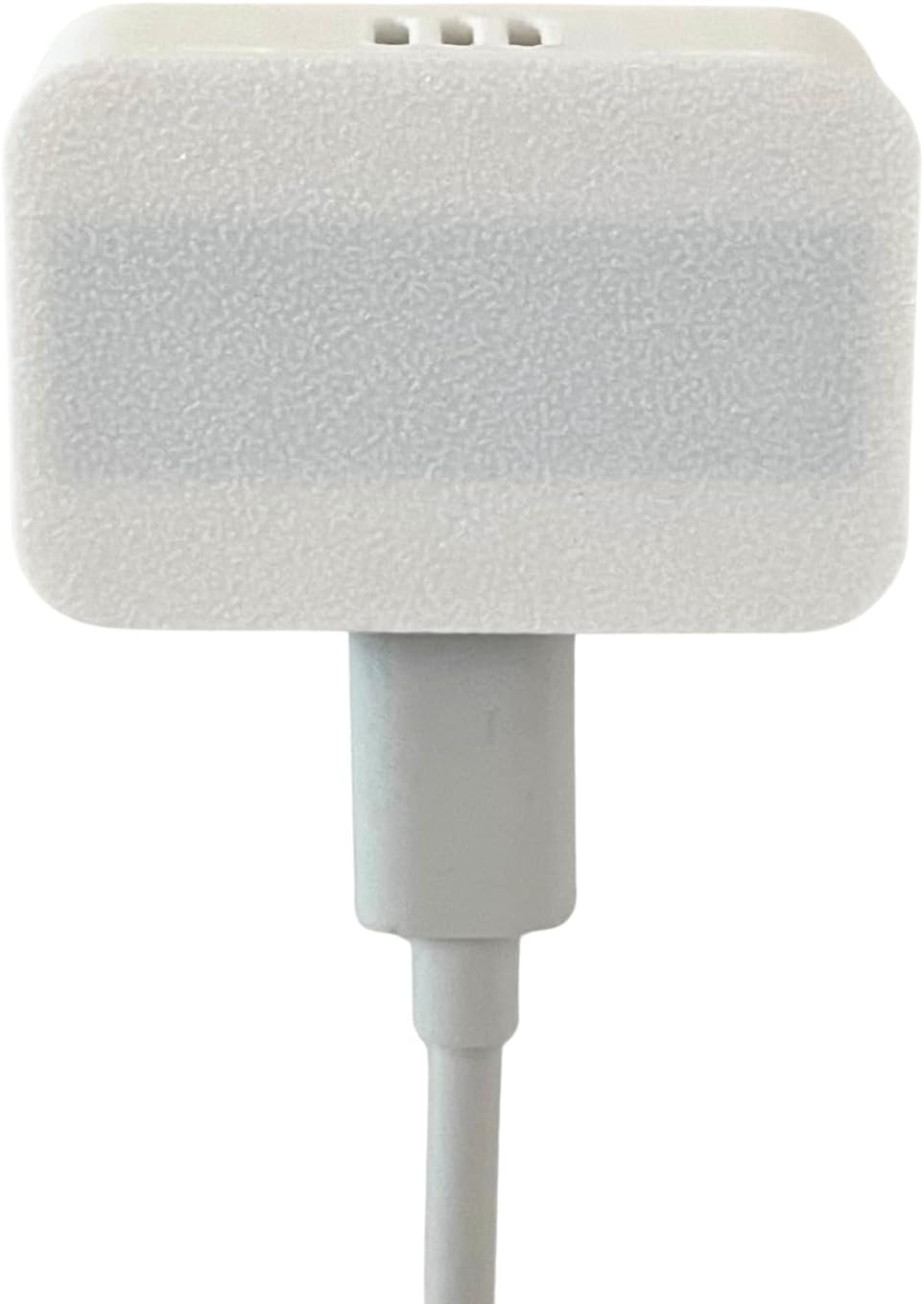
AKAMATIS v2.2 — lowest-cost entry mmWave for Home Assistant
- Brand
- AKAMATIΣ
- Highlights
- 24 GHz LD2410B/USB-C power/ESPHome pre-flashed/FCC certified
Why we picked it: The v2.2 delivers the same 20 ft LD2410B radar and plug-and-play ESPHome firmware as the pricier Litos v3, but strips the light sensor to reach the lowest price in this lineup. Right pick for a user who already has lux data elsewhere or simply does not need it.
| Brand | AKAMATIΣ |
|---|---|
| Color | White |
| Power Source | Corded Electric |
| Maximum Range | 20 feet |
| Mounting Type | Wall Mount |
| Battery Description | Battery not included |
| Compatible Devices | Home Assistant |
| Antenna Location | Home Automation, Motion Detection, Home Security Survailance |
| Frequency | 2.4 GHz |
| Item Dimensions D x W x H | 0.55"D x 1.6"W x 1.05"H |
If the only metric that matters is accurate static presence detection at the lowest outlay, the v2.2 is the answer. The HLK-LD2410B radar module detects stationary micro-movements indoors at the same stated 20 ft as the Litos v3; the difference is in the supporting hardware and extras. No VEML7700 means conditional lighting automations based on brightness need a separate lux sensor or a Home Assistant helper pulling from another source. The external antenna on the Seeed C3 controller keeps Wi-Fi reliable in signal-challenged locations — the same advantage the Litos v3 carries. FCC certification on both the LD2410B and the Seeed C3 is a practical compliance note for US installs. USB-C power keeps things clean; no batteries to replace. Setup path is identical to the Litos v3: connect to the device hotspot, enter credentials, appear in Home Assistant’s ESPHome integration. The absence of a light sensor is the clearest reason to choose the Litos v3 over this model, so the decision reduces to one question: do you need lux at this sensor location? If not, save the difference. Home Assistant exclusivity applies here too — this sensor has no path to Alexa, Google Home, or Apple Home.
Owner feedback patterns
Buyer feedback on the v2.2 centres on fast onboarding — the hotspot-to-Home-Assistant path is consistently called out as the main convenience over DIY ESPHome builds. A minority of reports mention that sensitivity defaults benefit from a few adjustments to the LD2410B gate thresholds before false exits are eliminated in busy rooms. The compact size relative to other mmWave sensors is a recurring positive note.
Who it’s for: Home Assistant users who want mmWave static presence at the lowest price and already source lux data separately Skip it if: Skip if you need a light sensor included or run a platform other than Home Assistant. Use case: Budget single-room mmWave presence on a pure Home Assistant Wi-Fi setup
Akamatis Litos v3 2-pack — same hardware, better per-unit cost

- Brand
- AKAMATIΣ
- Highlights
- 2-unit bundle/24 GHz LD2401/VEML7700 lux/ESPHome pre-flashed
Why we picked it: Two Litos v3 units in one mid-range purchase — identical LD2401 radar and VEML7700 light sensor hardware as the single-pack best overall pick, priced to cost less per sensor than buying two singles. The right choice only if you need presence plus lux detection in two separate rooms.
| Brand | AKAMATIΣ |
|---|---|
| Color | White |
| Power Source | Corded Electric |
| Maximum Range | 20 feet |
| Mounting Type | Wall Mount |
| Compatible Devices | Home Assistant |
| Frequency | 2.4 GHz |
| Item Dimensions D x W x H | 0.45"D x 1.35"W x 1.35"H |
| Manufacturer | AKAMATIS LLC |
| Number of Items | 2 |
Everything said about the single-pack Litos v3 applies here: LD2401 24 GHz radar, VEML7700 lux, external-antenna Seeed C3, pre-flashed ESPHome, wall mount, Home Assistant only. The only variable is quantity. Buying this 2-pack makes sense when you are equipping a bedroom and a home office at the same time, or replacing two PIR sensors in adjacent rooms. Each unit operates independently in Home Assistant — two separate ESPHome devices, two separate presence entities, two separate lux entities. There is no pairing or grouping step between them. The 20 ft per-unit range means two sensors in a large open-plan area will produce overlapping coverage zones, which requires careful zone-to-automation mapping to avoid double-firing scenes. Both units are corded, so two power points are required. The 3D-printed light-permeable front panel is the same on both; ambient light passes through to the VEML7700 as advertised. If you only need one sensor now, start with the single-pack; the 2-pack saves money only when both installs happen within the same purchase cycle. Home Assistant exclusivity is a hard limit for both units.
Owner feedback patterns
Buyers purchasing the 2-pack report identical setup experiences for each unit — the hotspot onboarding works the same on the second sensor as the first. No consistent negative theme distinguishes this listing from the single-pack; the trade-off notes around sensitivity tuning and cable placement apply equally to both units. A share of buyers explicitly mention the per-unit cost saving as the reason for choosing the bundle.
Who it’s for: Home Assistant households equipping two rooms at once with presence plus ambient-light sensing Skip it if: Skip if you only need one install point right now — the single-pack is the lower-commitment starting point. Use case: Two-room simultaneous mmWave presence and lux rollout on Home Assistant
What each price band actually buys
Budget tier
At the budget level you get a single-purpose 24 GHz mmWave radar, pre-flashed ESPHome firmware, and USB-C wired power. The AKAMATIS v2.2 is the reference here: accurate static presence detection at the lowest per-unit cost, no light sensor, Home Assistant only. The SONOFF SNZB-06P24 also sits at budget but adds Zigbee protocol and a lux sensor — the trade-off is a shorter 4 m range versus the 6 m of the Wi-Fi picks.
Mid-range tier
Spending more buys one of three things: a lux sensor alongside the radar (Akamatis Litos v3 single-pack), a 2-unit bundle (Litos v3 2-pack), or battery power plus Matter over Thread plus IPX3 splash-proofing (LAFAER LWR02). The LAFAER LWR02 is the most distinct mid-range step up — not just more features, but a different power and protocol model entirely.
Premium tier
No pick in this roundup reaches a premium price band. If your budget extends further, the category equivalent would be a multi-sensor panel with mmWave plus CO₂ or VOC sensing — none of the five picks here cross into that territory. For pure Home Assistant presence use, mid-range covers every meaningful capability.
Claims that need context
“20 ft range” is a ceiling, not a floor
Both Akamatis products state 20 ft (6 m) maximum range. The HLK-LD2401 and LD2410B datasheets specify that figure under ideal conditions — open space, no obstructions, optimal gate sensitivity settings. Through a sofa, at a 45° angle, or with the sensor mounted low on a wall, effective range is shorter. Plan for 10–15 ft as a reliable working distance in furnished rooms.
“Self-learning calibration” takes time
The SONOFF SNZB-06P24’s Detection Calibration is a genuine feature, but it requires the sensor to observe your environment over multiple occupancy cycles before its suppress list stabilises. Buyers expecting immediate out-of-box false-trigger elimination will need patience; the CSA Zigbee cluster specification notes that adaptive detection parameters typically settle after 24–72 hours of normal use.
“2-year battery life” depends on use frequency
LAFAER's LWR02 quotes up to two years on two AA batteries. That figure is a manufacturer estimate under typical residential conditions. A bathroom sensor triggered dozens of times daily, or one polled frequently by a Home Assistant automation, will deplete cells faster. Rechargeable AAA cells are supported, so high-use rooms benefit from that option.
“No hub required” on Matter still needs a border router
Matter over Thread does not mean hub-free. It means the sensor communicates over the Thread mesh protocol, which requires a Thread border router already in your home. The CSA Matter v1.3 specification lists Apple TV 4K (2nd/3rd gen), HomePod (2nd gen), Echo 4th Gen, and Nest Hub Max as qualifying border routers. Home Assistant Yellow also qualifies. If none of those are present, a border router purchase is a prerequisite for the LWR02.
Which sensor fits your situation
“I want to automate lights in a home office where I sit still for hours”
Static detection is the core need. Any PIR sensor will falsely mark the room vacant within minutes. Go with the Akamatis Litos v3 or v2.2 — the LD2401 and LD2410B radars both read micro-movements at a seated desk. Add the Litos v3 if you also want the light sensor for a “turn on only when dark” condition.
“I have an open-plan living area with a fan and an aquarium”
Moving air and water vibration generate RF noise that defeats naive mmWave thresholds. The SONOFF SNZB-06P24’s self-learning calibration is designed exactly for this scenario. Use the zone editor to exclude the aquarium corner and the fan arc, then let calibration run for 48 hours before evaluating false-trigger rate.
“I need a sensor in a bathroom with no power outlet near the ceiling”
The LAFAER LWR02 is the only pick that is battery-powered, wire-free, and IPX3 splash-rated. Mount it on the magnetic hemispherical base above the door frame, connect via Thread, and the sensor reports presence to Home Assistant without a cable run.
“I’m equipping three or four rooms on a tight budget”
Start with the Litos v3 2-pack for two rooms, then add the AKAMATIS v2.2 for the third. That combination covers three rooms with 24 GHz mmWave and ESPHome at the lowest combined outlay, with lux sensing in two of the three.
Other candidates
- Akamatis v1.3L with Light Sensor: Uses the older HLK-LD2410B radar chip; the Litos v3 (B0H2QYVWZ7) occupies the same Home Assistant-only niche with the newer LD2401 radar and a superior VEML7700 lux implementation at a comparable price band.
- SONOFF SNZB-06P (5.8 GHz): Runs at 5.8 GHz cmWave rather than 24 GHz mmWave, which reduces sensitivity to micro-movements like breathing; the SNZB-06P24 replaces it with true mmWave detection at the same budget tier.
- THIRDREALITY Zigbee Motion Sensor: PIR-only design cannot detect a stationary occupant — the defining capability that separates a presence sensor from a standard motion detector — so it fails the core use case of this category.
- Arlo All-in-One Sensor MS1001: Add-on that requires the proprietary Arlo SS1201 or SS1501 hub as a hard prerequisite; it has no direct Home Assistant integration path without the closed Arlo ecosystem in place.
- Enbrighten Z-Wave In-Wall Motion Switch: A hardwired in-wall light switch with a PIR occupancy mode — not a standalone presence sensor — and its Z-Wave compatibility list does not include Home Assistant natively, requiring an additional Z-Wave USB coordinator.
Deciding between them
Wi-Fi or Zigbee: which protocol causes less latency in Home Assistant automations?
Both are fast enough for lighting. Wi-Fi sensors like the Akamatis Litos v3 and v2.2 report state changes directly to Home Assistant over the local network with no hub hop, typically within one to two seconds. Zigbee sensors like the SONOFF SNZB-06P24 add one coordinator hop but still land under two seconds in a healthy mesh. Protocol choice should hinge on what hub hardware you already own, not latency alone.
Is 24 GHz mmWave worth it over PIR for static occupancy?
Yes, if detecting a seated or sleeping person matters. PIR sensors react to thermal movement; a person sitting still at a desk cools to room temperature within minutes and triggers a false-vacant state. A 24 GHz mmWave radar like the HLK-LD2401 (Litos v3) or LD2410B (v2.2) reads micro-movements — breathing chest rise, finger motion — that PIR misses entirely; the SNZB-06P24 uses a 24 GHz radar whose specific module the manufacturer does not publish.2, SNZB-06P24) reads micro-movements — breathing chest rise, finger motion — that PIR misses entirely. The LAFAER LWR02 runs both in parallel to get the range benefit of PIR and the stillness benefit of mmWave.
Do I need a built-in light sensor, or can I skip it?
Skip it only if you already have a lux source in Home Assistant for that room. If you want a rule like “turn on lights only when occupied and dim”, you need a brightness reading. The Litos v3 (single or 2-pack) and the SONOFF SNZB-06P24 both include an ambient light sensor at no premium over the sensor-only v2.2. For two-condition lighting automations, the integrated lux option saves a second device and a second entity to manage.
How many sensors does a typical 15 × 20 ft (4.5 × 6 m) living room need?
One sensor placed in a corner at ceiling or high-wall height generally covers that footprint, since the Litos v3, v2.2, and SNZB-06P24 all claim 20 ft (6 m) range indoors. The SONOFF SNZB-06P24’s 4 m ceiling-mount radius is tighter — a 15 × 20 ft room may need two units placed 10–12 ft apart. Sofas, bookshelves, and partial walls reduce effective range; plan for a second sensor in L-shaped or heavily furnished rooms.
Is Matter over Thread worth the premium over a plain Zigbee sensor?
Only if you run a multi-platform home — Apple HomeKit, Google Home, and Home Assistant simultaneously — or specifically need battery-powered splash-proof placement. The LAFAER LWR02 is the one pick here that justifies the mid-range step up with IPX3 waterproofing and two-year battery life alongside Matter support. For a Home Assistant-only setup with wired power, the Litos v3 or SONOFF SNZB-06P24 deliver comparable presence accuracy at a lower price.
The bottom line
For most Home Assistant setups, the Akamatis Litos v3 is the right first purchase: wired, 24 GHz mmWave, lux sensor included, and genuinely plug-and-play ESPHome. The one case where a different pick wins is a damp or outlet-free room — the LAFAER LWR02 handles that with its battery power and IPX3 rating. Skip mmWave presence sensors altogether if your Home Assistant instance is not already stable and running: every wired Wi-Fi pick here requires ESPHome integration to be functional, and setting that up is a prerequisite, not an afterthought.
How this guide was made
Editorial responsibility: Repack Mechanics.
What changed
- Published guide