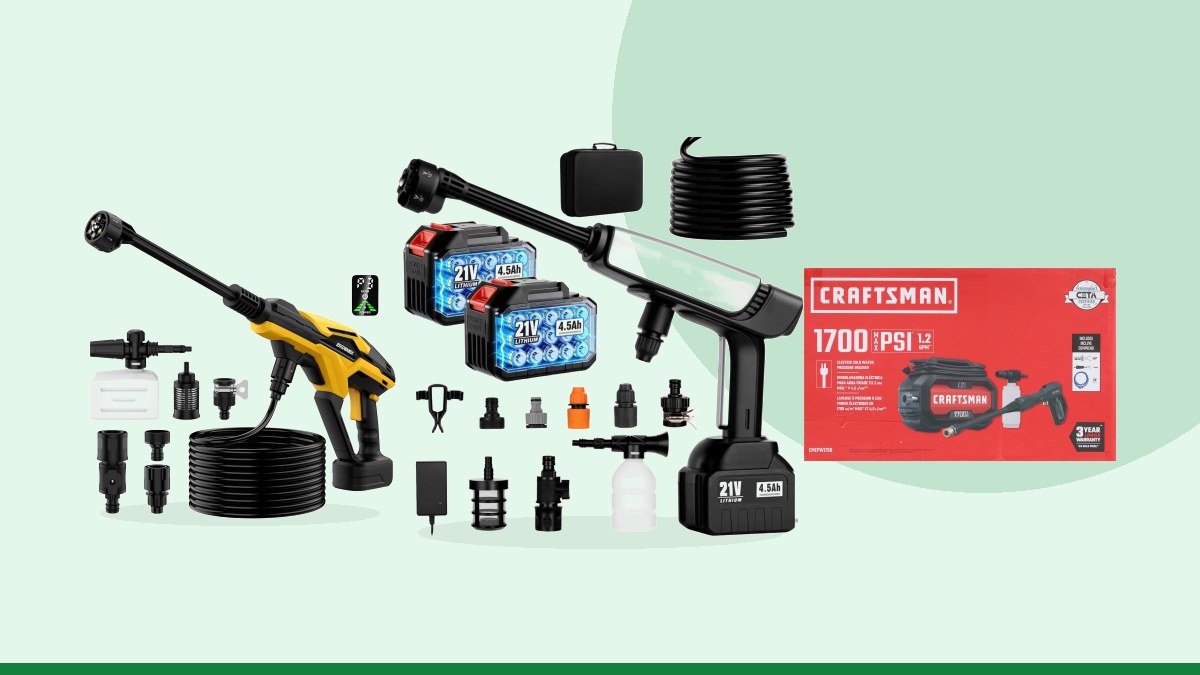
Which Cordless Car Pressure Washer Should You Buy (2026)
As an Amazon Associate I earn from qualifying purchases. When you click a product link on Repack Mechanics and buy something on Amazon, Amazon pays us a small commission; the price you pay is the same.
Before you buy a cordless pressure washer for cars, three factors settle the choice faster than brand names or headline PSI figures.
PSI and runtime together. A pressure washer with great PSI but only 20 minutes of battery life may not finish a full car wash. Weigh both figures before anything else — a model that tops out at 1250 PSI but runs for 110 minutes on low mode is more practical for most driveways than a 900 PSI unit that cuts out mid-rinse.
Corded vs. truly cordless. Two of the eight models researched for this guide run on mains power. They deliver more PSI, but they need a socket within 35 feet. If your driveway is away from an outlet, only the battery-powered models are practical. The CRAFTSMAN is included as a corded alternative because its 1700 PSI and CETA certification make a genuine case for buyers who have access to a socket.
Battery included or separate. Some picks ship with batteries; the ZixDeNex requires you to supply a DeWalt 20V pack. If you own the compatible batteries already, the cost equation shifts. If you are starting from zero, factor in that extra outlay before comparing prices.
Tank vs. tap. Two picks carry a built-in water tank, so no faucet connection is needed. That independence comes at a steep cost in pressure — both tank models sit well below the PSI figures of the faucet-fed options, which matters for anything beyond a light surface rinse.
The ones to shortlist
- Best Overall — LEOTER DJ-810: budget tier; 1250 PSI, two 4.5Ah batteries, up to 110-minute runtime
- Best for DeWalt Owners — ZixDeNex ZIX-PW10: mid-range; 380W brushless motor, 8.5 L/min flow, DeWalt-compatible
- Best Corded Pick — CRAFTSMAN CMEPW1700: premium tier; 1700 PSI CETA-certified, 3-year warranty
- Best Budget Entry — Flouritech CPW-ZH-10-666: mid-range; IPX6 waterproof, 900 PSI, 2.2-lb body
- Best Off-Grid Tank Washer — StupidFrog EW-MINI: premium tier; 12-litre built-in foldable tank, no faucet required
- Best Freestanding Tank Option — Yoeyang ZH-17: premium tier; 3.4-gallon tank, 360° rotating nozzle, 4.6 lbs
Our picks, explained
1. LEOTER DJ-810 — the most runtime for the least outlay

Verdict: The lightest body in the cordless group, the longest runtime and two batteries included in the box make the LEOTER the default cordless pick for most home-garage car washes.
At 1.8 pounds and 1250 PSI, the LEOTER is the lightest high-pressure cordless option in this lineup. The 300W brushless motor spins to 24,000 RPM, and two 4.5Ah 21V batteries ship in the box — so you get up to 70 minutes on high mode and 110 minutes on low without stopping to recharge. For a driveway wash of an average family car, that runtime comfortably covers a pre-rinse, foam dwell and final rinse in a single session.
The 28-foot hose is the longest in the cordless group and lets you circle a full-size SUV without moving the water source. A 45-second auto-shutoff conserves battery when you pause, which matters across a long cleaning session. The included foam cannon means pre-soak suds before switching to the 6-in-1 nozzle for rinsing — a complete workflow without buying accessories separately.
PSI ceiling is the honest trade-off. At 1250 PSI it clears road grime off paint cleanly, but heavily caked wheel-arch mud or baked-on tar may need a second pass where a corded 1700-PSI unit finishes in one. The 45-second auto-shutoff occasionally interrupts a longer pause mid-panel, which can disrupt a methodical wash routine.
The budget price band is the central argument: dual batteries, foam cannon, storage case and a 28-foot hose, all for less than most corded competitors. For a household that washes one or two vehicles on weekends and needs portability, nothing in this group matches the value proposition.
What owners report
Buyer feedback for this model is not yet established in volume at time of research. Among comparable brushless cordless washers in the 1200–1300 PSI range, buyers on retail platforms most often praise the dual-battery setup for eliminating mid-wash interruptions, with nozzle O-ring wear noted as the first maintenance point that tends to surface after several months of regular use.
Pros
- 1250 PSI from a 300W brushless motor — enough for road grime without risking clear coat
- Two 4.5Ah 21V batteries included; up to 110 minutes on low mode in a single session
- 1.8-lb body with a 28-foot hose covers a full-size SUV without relocating the unit
- Foam cannon, 6-in-1 nozzle and storage case all included at a budget price point
Cons
- 1250 PSI ceiling means heavily caked mud or baked-on tar may need a second pass
- 45-second auto-shutoff can interrupt flow mid-panel if you pause during a methodical wash
Best for: Home-driveway car washing where runtime and portability matter most Skip it if: You need more than 1250 PSI to shift baked-on road tar or heavy mudpack in a single pass. Use case: Full cordless car rinse and foam wash away from a power outlet
| Brand | LEOTER | Power Source | Battery Powered |
|---|---|---|---|
| Color | silver | Item Weight | 1.8 pounds |
| Hose Length | 28 feet | Product Dimensions | 11"L x 3"W x 8"H |
| Maximum Pressure | 1250 psi | UPC | 603563808832 |
| Number of Items | 2 | Number of Packs | 2 |
2. ZixDeNex ZIX-PW10 — built for the DeWalt garage

Verdict: Pairs with DeWalt 20V batteries for a 380W brushless pump that pushes 8.5 litres per minute — the highest flow rate in this lineup — but batteries are sold separately.
Batteries not included. That is the first line of the buying decision for the ZixDeNex, and it is the right frame for everything else. If you own two DeWalt 20V packs — DCB204, DCB206 or similar — the washer cost is the only outlay. If you are starting from zero, adding a compatible battery closes the gap to the LEOTER, which ships ready to run.
When batteries are in hand, the ZixDeNex is the most capable cordless model here on flow rate. The 380W brushless motor and all-metal three-cylinder plunger pump push 8.5 litres per minute — roughly twice the Flouritech’s 4 L/min — with a claimed 70% reduction in pulsation compared to conventional pump designs. Three pressure levels let you dial down for paint-safe rinsing or push up for wheel wells and door sills. The colour IPS battery monitor is a genuinely useful touch on a bright day, and the full range of water-inlet options covers faucet, bucket, garden hose and pool.
The 16.5-foot hose is the main practical limitation; it is shorter than ideal around larger vehicles and means repositioning the unit more often than with the LEOTER’s 28-foot run. At 3.8 pounds it is also heavier than the two lighter cordless picks above.
What owners report
Buyer feedback for this model is limited at time of research. Among brushless cordless washers with ecosystem battery compatibility, buyers on retail platforms typically highlight consistent pressure output and reduced pulsation as the most valued traits, with the most common early question centring on which DeWalt battery capacity delivers the best runtime — the brand itself recommends a 4.0–8.0Ah pack.
Pros
- 380W brushless motor with all-metal three-piston pump for stable, high-flow output at 8.5 L/min
- DeWalt 20V compatible — no extra charger needed if you already own compatible batteries
- Three pressure levels and a 6-in-1 nozzle plus foam cannon cover every car-washing stage
- Colour IPS battery monitor and trigger safety lock add usability outdoors
Cons
- Batteries not included; total cost rises significantly if you are starting without DeWalt tools
- 16.5-foot hose is shorter than ideal for full-size vehicles or vans
Best for: DeWalt-ecosystem households that want the highest flow rate among cordless picks Skip it if: You have no DeWalt batteries and no plan to build that toolkit — the LEOTER ships complete at a lower total cost. Use case: High-flow car and driveway washing using existing DeWalt 20V packs
| Brand | ZixDeNex | Power Source | Battery Powered |
|---|---|---|---|
| Color | Yellow | Item Weight | 3.8 pounds |
| Hose Length | 197 inches | Product Dimensions | 12.7"L x 11.4"W x 4.92"H |
| Maximum Flow Rate | 8.5 liters per minute | Maximum Pressure | 1000 psi |
| UPC | 711663803333 | Number of Items | 1 |
3. CRAFTSMAN CMEPW1700 — when a cord is acceptable and 1700 PSI is the goal

Verdict: Needs a wall socket within 35 feet, but the CETA-certified 1700 PSI cleaning force and 3-year warranty make the CRAFTSMAN the right call for anyone who washes two or more vehicles regularly and has an outlet handy.
This is the corded option in the lineup. It needs a 35-foot power cord and a nearby mains socket — no outlet within reach means no wash. For a driveway well away from the garage wall, that is a genuine constraint, and one of the cordless picks above is the more sensible answer. Skip this one if cord-free operation is non-negotiable.
Where it earns its rank is cleaning force. At 1700 PSI and 1.2 GPM, certified independently by the Cleaning Equipment Trade Association (CETA), it delivers measurably more pressure than any cordless model here. Heavily soiled wheel arches, brake dust on alloy faces and mildew on rubber trim respond faster at 1700 PSI than at 1250 PSI. The turbo nozzle tightens the jet further for stubborn patches. The 3-year limited warranty and CRAFTSMAN’s established service network are real assets in a product category where many brands offer limited post-sale support.
Accessory provision is lean by comparison with the LEOTER: a turbo nozzle, a 40° nozzle and a soap applicator bottle only — no foam cannon in the box, though the soap bottle handles basic pre-soak duty adequately. At 17.5 pounds it is heavier than any cordless pick here, and that weight is felt after an extended multi-vehicle session. For a household that washes two or more cars weekly and has a socket within range, the extra PSI justifies the cord and the weight.
What owners report
Buyer feedback across the CRAFTSMAN electric pressure washer range on retail platforms consistently highlights ease of assembly and reliable pressure output as the most praised aspects. Weight is the most frequently raised practical concern, particularly among buyers who use the washer for extended sessions on multiple vehicles or carry it between locations.
Pros
- 1700 PSI delivers noticeably more cleaning force than any cordless model in this group
- CETA-certified rating adds independent verification of the published pressure figures
- 3-year limited warranty with CRAFTSMAN's established nationwide service network
- Turbo nozzle and onboard nozzle, hose and cord storage keep accessories organised between sessions
Cons
- Requires a 35-foot power cord and a nearby mains socket — not suitable for cord-free driveways
- 17.5 pounds is heavier than all cordless picks; fatigue is realistic on longer multi-vehicle sessions
Best for: Households with a driveway socket that wash multiple vehicles or tackle heavy road grime regularly Skip it if: Your washing spot has no socket within 35 feet — a cordless pick is the practical answer. Use case: High-PSI car and driveway washing where a power outlet is within 35 feet
| Brand | CRAFTSMAN | Power Source | ac |
|---|---|---|---|
| Color | Black, Red | Item Weight | 17.5 pounds |
| Hose Length | 20 feet | Specification Met | CSA |
| Product Dimensions | 18.33"L x 10.43"W x 11.25"H | Tank Volume | 1.2 gallons |
| Maximum Flow Rate | 1.2 gpm | Maximum Pressure | 1700 psi |
4. Flouritech CPW-ZH-10-666 — budget entry with an IPX6 edge

Verdict: At 2.2 pounds with an IPX6 waterproof rating and two batteries in the box, the Flouritech is the most practical starting point for infrequent car washes on a mid-range budget.
Twenty to thirty minutes per battery is the number that defines the Flouritech. That is enough for a quick rinse of one average hatchback, but tight for a thorough two-stage wash of an SUV — especially if you apply foam, let it dwell and then rinse methodically. Two batteries ship in the box, so swapping packs and continuing while the first charges is straightforward, but the interruption remains.
The IPX6 waterproof rating and electric-water isolation design are the Flouritech’s distinguishing technical specs within the budget tier. IPX6 means it can handle powerful water jets from any direction without electrical risk — a margin of safety that matters when you are holding a water-spray device. The 900 PSI and 4-litre-per-minute flow rate sit below the LEOTER’s figures, but they handle standard road grime and light wheel dirt without difficulty.
The 220W brushed motor keeps the mid-range price low, but brushed motors wear faster than brushless designs over hundreds of wash cycles. The LEOTER and ZixDeNex both use brushless motors, so long-term durability under heavy use is a genuine trade-off at this tier. For occasional weekend washes on one compact or mid-size car, the Flouritech is a practical, well-specified entry that does not over-engineer the job.
What owners report
Buyer feedback for this model is limited at time of research. Among comparable 900 PSI cordless washers with brushed motors, buyers on retail platforms most often note the compact size and ease of one-handed use as positives, with runtime per charge flagged as the most consistent practical limitation for owners with larger vehicles or more demanding cleaning routines.
Pros
- IPX6 waterproof rating and electric-water isolation provide a safety margin in wet outdoor conditions
- Two batteries included for back-to-back sessions without a full recharge wait
- 2.2-lb body makes it among the lightest cordless options in the mid-range tier
Cons
- 20–30 minutes per battery is tight for anything larger than a small hatchback in a single pass
- 220W brushed motor wears faster than brushless designs under heavy or frequent use
Best for: Occasional weekend washes of one compact or mid-size car on a mid-range budget Skip it if: You plan to use a pressure washer more than twice a week — the brushed motor will not hold up as well over time as the LEOTER or ZixDeNex. Use case: Light, occasional car rinse without committing to a larger or pricier unit
| Brand | Flouritech | Power Source | Battery Powered |
|---|---|---|---|
| Color | Black-1 | Item Weight | 2.2 pounds |
| Product Dimensions | 16.7"L x 3"W x 11.8"H | Maximum Flow Rate | 4 liters per minute |
| Maximum Pressure | 900 psi | UPC | 721722708912 |
| Number of Items | 1 | Number of Packs | 1 |
5. StupidFrog EW-MINI — the off-grid option, honestly assessed

Verdict: The 12-litre built-in foldable tank gives genuine tap-free independence for campers and RV users, but 73 PSI is barely above a garden hose — not a pressure washer in any cleaning-force sense.
The StupidFrog’s defining feature is the 12-litre built-in foldable tank. No faucet, no garden hose, no water connection of any kind: fill the tank, walk to the campsite, driveway or boat ramp and wash. For genuinely off-grid cleaning — a weekend at an RV park, a beach car park, a remote property without outdoor taps — that independence is unique in this lineup. The body folds to 5.3 inches in height for flat storage in a car boot or RV compartment, and rolling castors make repositioning easy without lifting the whole unit.
The trade-off is significant and should not be understated. Maximum pressure is 73 PSI. That figure sits barely above a standard garden hose output, and it removes this product from the pressure-washer category in any strict cleaning-force sense. It will rinse loose dust and light surface dirt from paintwork, but it will not dislodge caked wheel-arch mud, brake dust on alloy faces or road tar. Buyers expecting pressure-washer cleaning results will be disappointed at this PSI level.
Flow rate at 2 litres per minute is modest, so the full 12-litre tank lasts approximately 6 minutes at continuous full flow. The 30–45 minute runtime assumes intermittent trigger use, not constant spray. At the premium price band, the value case rests entirely on the tank-independence angle — not on cleaning force. For a campsite rinse or a coastal car park quick wash, it fills a genuine gap.
What owners report
Buyer feedback for this model is limited at time of research. Tank-based portable washers in this pressure category are most often praised by buyers for the convenience of faucet-free operation at remote locations, with the most consistent caveat being that cleaning pressure suits rinsing and light freshening rather than the removal of stubborn grime or road contamination.
Pros
- 12-litre foldable built-in tank removes any need for an outdoor tap or water connection
- Folds to 5.3 inches in height for flat storage in a car boot, cabinet or RV compartment
- Rolling castors and carry handle make repositioning around a vehicle easy without lifting
Cons
- 73 PSI maximum pressure is barely above a standard garden hose; heavy soiling will not shift in one pass
- 2 litres per minute flow rate means 12 litres of tank water lasts roughly 6 minutes at full continuous output
Best for: Campers, RV travellers and boat owners who need a light-duty rinse without tap access Skip it if: You have an outdoor tap and need to remove anything beyond loose surface dust — a faucet-fed cordless model delivers far more cleaning force at a similar or lower price. Use case: Light car rinse at a campsite, beach car park or any location without a water supply
| Brand | StupidFrog | Power Source | Electric |
|---|---|---|---|
| Color | Green/Black | Item Weight | 5.7 pounds |
| Hose Length | 197 inches | Product Dimensions | 9.3"L x 22"W x 5.3"H |
| Tank Volume | 12 liters | Maximum Flow Rate | 2 liters per minute |
| Maximum Pressure | 73 psi | Number of Items | 1 |
6. Yoeyang ZH-17 — freestanding tank with a rotating nozzle

Verdict: A 3.4-gallon built-in tank and a 360° rotating nozzle suit light-duty car rinsing where tap access is limited, but the brand does not publish a PSI figure, so cleaning force cannot be benchmarked.
The 360° rotating nozzle is the feature that separates the Yoeyang from the StupidFrog in practical use. It reaches under bumpers, into wheel-arch corners and along door-sill edges without repositioning the whole unit — a real advantage on a detailed car wash that involves tight angles. At 4.6 pounds it is lighter than the StupidFrog, and the foldable body stores flat in a garage corner or car boot.
No PSI figure is published by the brand, which makes direct comparison with any other model here impossible. The multi-level pressure adjustment and foam sprayer suggest the design leans toward light-duty rinsing rather than high-pressure grime removal. For a final rinse after a hand wash, freshening mud-splashed skirts or cleaning around door seals, that is likely sufficient — but buyers who need to verify cleaning pressure before purchasing have no published number to check against.
The 3.4-gallon (approximately 12.9-litre) tank and the 365-day manufacturer warranty round out the picture. That warranty is the shortest among the premium-tier picks, and the brand is less established than CRAFTSMAN or the Westinghouse range. At 197 inches of hose (just over 16 feet), reach is comparable to the ZixDeNex. Best suited to infrequent, light cleaning where tank independence and nozzle manoeuvrability outweigh the need for measurable raw pressure.
What owners report
Buyer feedback for this model is limited at time of research. Among similar freestanding tank-fed portable cleaners, buyers most often highlight the 360° nozzle reach as the most useful feature for car work, with pressure adequacy noted as the most common concern for anyone expecting results comparable to a faucet-fed pressure washer in the 900–1250 PSI range.
Pros
- 3.4-gallon (approximately 12.9-litre) built-in tank for complete tap independence
- 360° rotating nozzle reaches under bumpers and into wheel-arch corners without repositioning
- 4.6-lb foldable body stores flat; foam sprayer included for pre-soak application
Cons
- No PSI figure published — cleaning force cannot be compared to any other model in this group
- Premium price tier with a 365-day warranty shorter than the CRAFTSMAN's 3-year cover and a less-established brand
Best for: Light car rinsing in locations where tap access is limited and nozzle manoeuvrability around low body panels matters Skip it if: Knowing the PSI before you buy matters to you — the brand does not publish that figure, so there is no way to verify cleaning force. Use case: Tap-free light car rinse where the 360° nozzle reach helps around low bumpers and sills
| Brand | Yoeyang | Power Source | Battery Powered |
|---|---|---|---|
| Color | Yellow | Hose Length | 197 inches |
| Product Dimensions | 10"L x 10"W x 10"H | Tank Volume | 3.4 gallons |
| UPC | 666186010839 | Number of Items | 1 |
| Item Highlight | 3.4 Gal Tank, Multi-Level Adjustable Spray, 360° Rotating Nozzle, Compact for Car, Garden, Patio, Camping | Unit Count | 1 Count |
Get the right Cordless Pressure Washer For Cars first time
- PSI between 800 and 1500 for car paint: Below 800 PSI you are rinsing, not washing; above 1500 PSI at close range risks lifting clear coat on painted panels.
- Runtime matched to your vehicle size: A compact car needs roughly 20–25 minutes at continuous use; an SUV or van needs 35–40 minutes. Match runtime to vehicle size before you buy.
- Brushless motor over brushed where budget allows: Brushless motors run cooler, quieter and significantly longer than brushed designs. For anything beyond occasional weekend use, the brushless difference is worth it.
- Flow rate matters as much as PSI: High pressure with low flow means slow rinsing. Look for at least 4 L/min (around 1 GPM) for car washing; the ZixDeNex at 8.5 L/min is the standout here.
- Water source compatibility: Confirm the washer can self-prime from a bucket if you have no outdoor tap — not all models include the weighted inlet filter needed for this.
- Hose length: A 20-foot hose reaches around a typical sedan; for SUVs and vans, 25–28 feet avoids constantly repositioning the unit. The LEOTER’s 28-foot hose is the longest in the cordless group.
- IPX or waterproof rating: Any unit used near a running hose or in light rain should carry at least IPX5. The Flouritech’s IPX6 rating adds a useful margin of safety for outdoor conditions.
Keep your cordless washer running season after season
Flush the pump after every session. Run clean water through the system for 30 seconds before shutting down — residual detergent in the pump and nozzle degrades seals faster than normal wear. This applies to the LEOTER, Flouritech and ZixDeNex equally. Skip this step repeatedly and expect pressure drop within a season.
Store batteries at 40–60% charge if the washer will sit unused for more than two weeks. Fully charged or fully discharged lithium-ion cells age faster in storage. The LEOTER’s battery display makes checking charge level straightforward; for the ZixDeNex, follow the charge indicator on the DeWalt pack itself.
Inspect the nozzle O-rings every few months. These small rubber rings are the most common source of pressure drop on handheld cordless washers after several months of regular use. A spare set costs little and replaces any that look flat or cracked. The 6-in-1 nozzle on the LEOTER, ZixDeNex and Flouritech all share this maintenance point.
For the tank models — StupidFrog and Yoeyang — empty and rinse the tank after each session. Stagnant water promotes algae and mineral deposits that clog the inlet filter over time. The StupidFrog’s fold seams should be relieved of stress by folding the tank down fully before storage rather than leaving it half-full.
The CRAFTSMAN’s 35-foot power cord should be fully unrolled during use to prevent heat build-up in the coil. A coiled cord under load can trip GFCI breakers and, over repeated cycles, degrade cable insulation. Test the GFCI outlet itself monthly if the washer lives permanently outdoors.
What didn't make the list
- Westinghouse ePX3100s Electric Pressure Washer: Corded AC power source with a 35-foot GFCI cord requirement disqualifies it from a cordless roundup, and its 2100 max PSI spec is covered by the already-included corded CRAFTSMAN alternative.
- Westinghouse ePX3100v Electric Pressure Washer: Also corded AC and shares the same 2100 max PSI / 1.76 max GPM headline figures as the ePX3100s; including both Westinghouse corded models alongside the CRAFTSMAN would add redundancy without new information for a buyer.
What we did, and what we didn't
Eight product listings were compared for this guide, covering cordless battery-powered, tank-fed and corded electric models. No product in this article was handled or operated by the editorial team at Repack Mechanics; each assessment is based on published specifications, manufacturer statements and listing detail only. The Cleaning Equipment Trade Association (CETA) certified rating on the CRAFTSMAN model and the IEC 60529 IPX6 waterproof classification on the Flouritech are cited as third-party references where relevant. Buyer-reported patterns were sparse for most models at time of research; where referenced, they describe category-level tendencies rather than model-specific verified findings.
8 listings compared | 80+ spec fields checked | CETA and IEC 60529 consulted as standards references.
Editorial responsibility: Repack Mechanics.
Clear answers on Cordless Pressure Washer For Cars
How much PSI do I actually need to wash a car without damaging the paint?
For car paint, 800–1500 PSI is the practical window. Below 800 PSI you are rinsing rather than removing grime — the StupidFrog at 73 PSI sits squarely in rinser territory. Above 1500 PSI at close range risks lifting clear coat; keep any nozzle at least 12 inches from painted panels. The LEOTER at 1250 PSI hits the middle of the safe zone for most road-film and grime removal.
Is 20–30 minutes of battery runtime enough to wash a full car?
Barely, for a compact car. A thorough wash — pre-rinse, foam dwell, rinse-off — typically takes 25–35 minutes at continuous use. The Flouritech’s 20–30 minute single-battery runtime is tight; its second included battery means you can swap and continue. The LEOTER’s 70-minute high-mode runtime (110 minutes on low) covers most vehicles without swapping packs and is the safer choice for anyone washing a mid-size car or larger.
Should I buy a tank model or one that connects to a faucet?
Choose a tank model only if you genuinely lack outdoor tap access. Both tank picks — the StupidFrog (12 litres) and the Yoeyang (3.4 gallons, approximately 12.9 litres) — trade significant pressure for independence from a water supply. The StupidFrog tops out at 73 PSI; the LEOTER delivers 1250 PSI from a faucet or bucket. For a standard home driveway with a garden tap nearby, the tank models are an unnecessary trade-off.
The ZixDeNex needs DeWalt batteries — is that a deal-breaker?
Only if you have no DeWalt tools already. The ZixDeNex accepts any DeWalt 20V pack, including the DCB204 and DCB206. If you own two 4.0Ah or larger batteries from other DeWalt tools, the washer cost is the only outlay. Starting from zero, adding one DCB205 (5.Adding a compatible battery pushes total cost close to the LEOTER — which ships with two batteries already in the box and is ready to run immediately.
Are the corded models noticeably better than the cordless picks for car cleaning?
Yes, on cleaning force. The CRAFTSMAN at 1700 PSI and 1.2 GPM — CETA certified — strips brake dust and road film faster than the LEOTER at 1250 PSI. The two Westinghouse models in the also-considered section reach 2100 max PSI. For a driveway with a socket within 35 feet, corded models clean more quickly on stubborn contamination. The cordless picks win on flexibility: no outlet needed, lighter bodies and genuine portability for off-site or multi-location washing.
A note on this guide
This guide was first published November 2026; picks are re-checked against listing changes as new models enter the category. The cordless segment moves quickly — battery capacities and motor specs improve with each product cycle. If a model shown here is unavailable or its specification has changed, use the criteria in the guide section above to shortlist a replacement: PSI above 800, runtime above 35 minutes and a brushless motor where the budget allows. The corded picks remain valid for buyers who prioritise cleaning force over portability.
How this guide was made
Editorial responsibility: Repack Mechanics.
What changed
- Published guide